
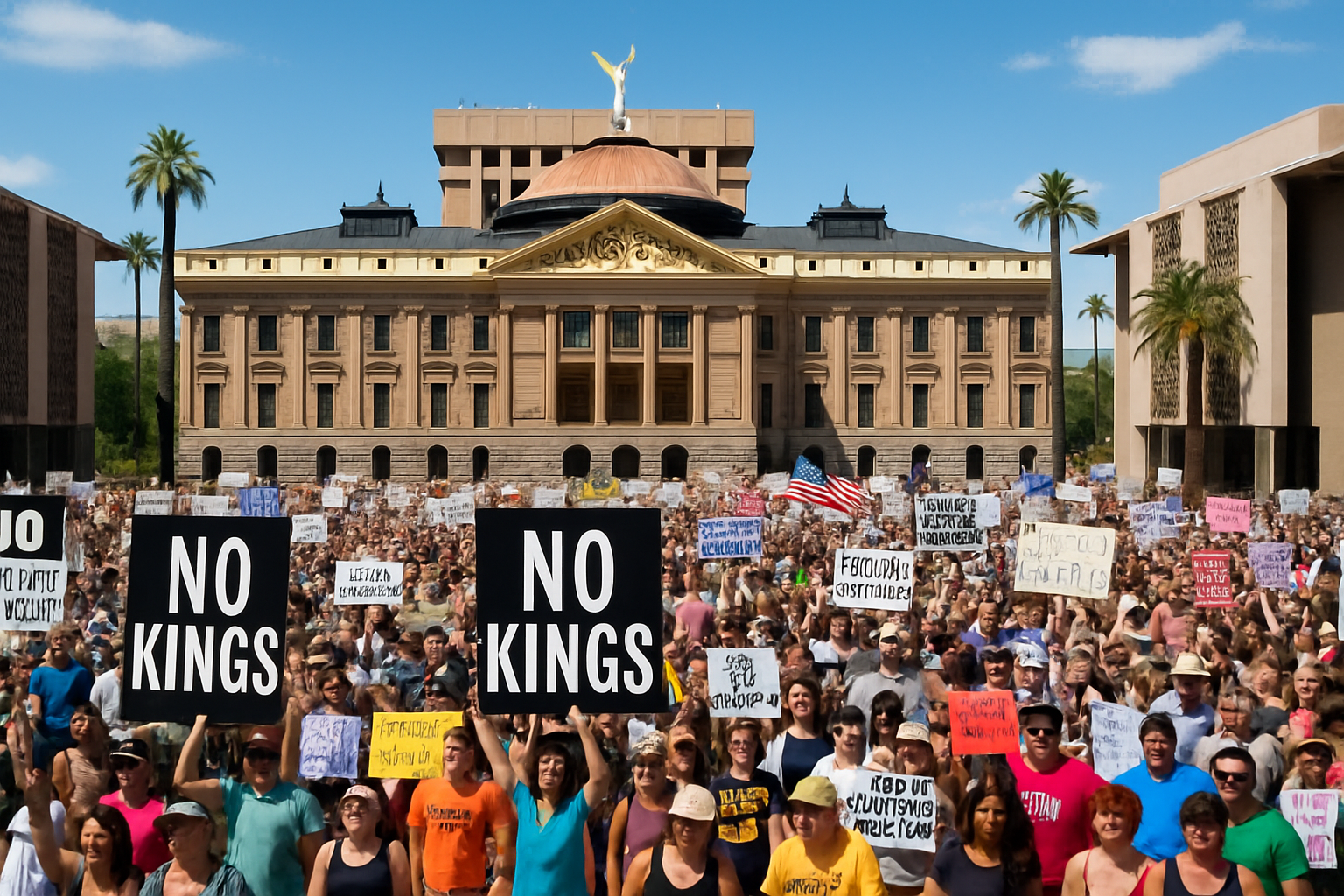
‘No Kings’ Protest Draws 20,000 to Phoenix State Capitol
An estimated 20,000 people gathered at Wesley Bolin Memorial Plaza in downtown Phoenix on June 14 as part of the nationwide “No Kings” protests, condemning former President Trump’s military parade and signaling growing political activism in Arizona.
A Peaceful Rally in Record Heat
Phoenix’s protest took place under intense heat, reaching 109°F, yet participants remained steadfast. Demonstrators lined the plaza and nearby streets with signs reading “No Kings” and “Defend Democracy,” while drivers honked and waved in solidarity fox10phoenix.com+9kjzz.org+9en.wikipedia.org+9. Organizers described the rally as Phoenix’s flagship event in a day of nationwide protest across more than 2,100 cities and towns, estimating participation of over 5 million people en.wikipedia.org.
Broad Support Across the State
Phoenix was not alone. Thousands turned out in Tucson, and Flagstaff saw approximately 3,000 protesters, reflecting widespread engagement across the state fox10phoenix.com+5en.wikipedia.org+5statepress.com+5. The state Capitol event also featured drag performances and activist speeches, drawing strong participation from students and immigrant communities concerned about ongoing immigration enforcement statepress.com.
Demands and Broader Concerns
The “No Kings” movement emerged in response to President Trump’s planned $45 million military parade in Washington, D.C., timed with his 79th birthday. Protesters voiced opposition to what they described as an authoritarian, militaristic display and demanded respect for democratic norms reddit.com+7kjzz.org+7en.wikipedia.org+7. The movement’s core message was visible: rejecting centralized power and supporting democratic, community-based leadership.
Political Climate and Implications
The large turnout in Phoenix aligns with national momentum targeting policies perceived as threatening to civil liberties. With the upcoming special primary election for Arizona’s 7th Congressional District scheduled for July 15 and a general election in September to fill Raúl Grijalva’s seat, political energy is mounting federalregister.gov+10fox10phoenix.com+10washingtonpost.com+10. Advocates see the protest as a signal of engaged civic participation that could influence local and national races.
Civic Engagement and Youth Presence
Young activists and college students were notably visible at the Phoenix event, leading chants and engaging with speakers—reinforcing the “No Kings” theme of rejecting centralized authority . Demonstrators also expressed concerns about immigration policy, reflecting broader national debates. Phoenix-area protesters emphasized the importance of listening to diverse constituents and supporting inclusive governance .
What’s Next for Arizona Politics
- High-profile elections: July’s primary and September’s general election in District 7 are expected to draw heightened attention, especially with candidates like Adelita Grijalva and Daniel Hernández competing for the Democratic nomination pinal.gov+14ballotpedia.org+14en.wikipedia.org+14.
- Continued activism: Organizers from the “No Kings” movement are planning follow-up events, including voter registration drives and community forums ahead of Novembers’ general elections.
- Lawmaker reaction: State officials have begun to take note. Some GOP legislators have defended the parade as a patriotic demonstration, while Democrats criticize its cost and symbolism, citing concerns echoed in Phoenix blogforarizona.net+8kjzz.org+8youtube.com+8.
Why This Matters to Arizona
The “No Kings” protests mark one of the largest political demonstrations in Arizona in recent years, showcasing civic engagement across age, ethnic, and geographic divides. With key elections approaching, the energy displayed could translate into voter turnout and influence policy debates—especially on issues like federal spending, military priorities, and democratic norms.
Arizona’s vibrant democracy is in motion. With election campaigns ramping up and public demonstrations gaining traction, the state’s political landscape stands at a pivotal moment—reflecting both local concerns and broader national currents in an ever-shifting political climate.