
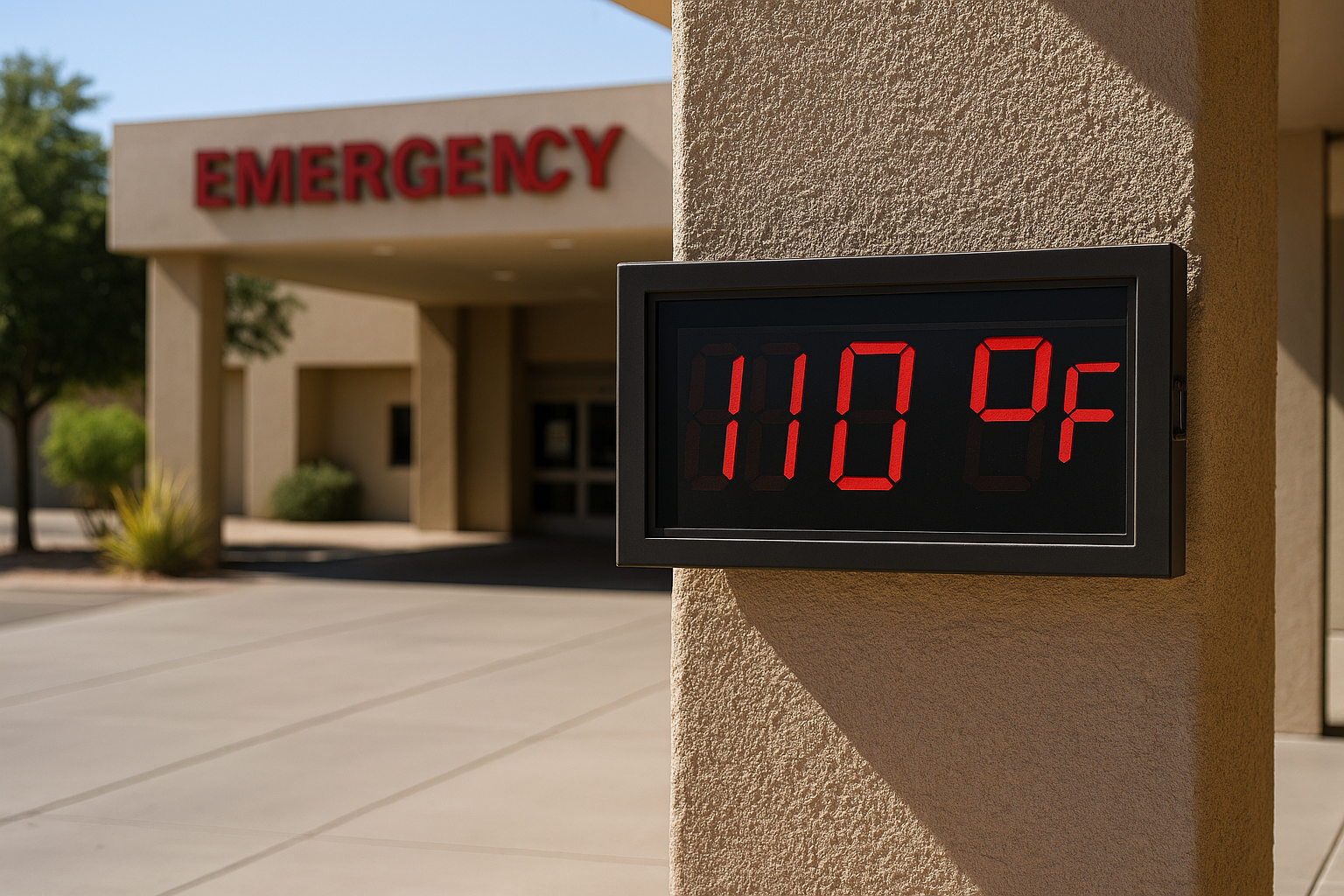
First Heat‐Related Death of 2025 Reported in Maricopa County as Temperatures Soar
Maricopa County has recorded its first confirmed heat‐related death of 2025—an elderly man who sustained injuries in the previous season—while statewide emergency rooms continue to see thousands of heat illness cases as Arizona braces for record‐high temperatures.
Early Fatality Highlights Ongoing Risk
On June 4, the Maricopa County Department of Public Health confirmed an older adult’s death resulted from heat‐related injuries incurred during the summer of 2024, marking the first official heat‐related fatality of the year azfamily.com+2maricopa.gov+2kjzz.org+2azfamily.com. Though investigations are still underway into 63 additional possible deaths, the early toll underscores how prolonged exposure to high temperatures can cause lingering health effects.
Thousands of ER Visits Expected
The Arizona Department of Health Services (ADHS) estimates roughly 4,300 people visit emergency departments annually for heat‐related illnesses washingtonpost.com+4azdhs.gov+4azdhs.gov+4. These include dehydration, heat exhaustion, and heat stroke. As of mid‐June, Maricopa County has already recorded one confirmed fatality and dozens under investigation during weeks 23–24 of 2025 azfamily.com+7maricopa.gov+7kjzz.org+7. Emergency rooms typically see spikes during sustained temperature surges.
Extreme Heat Puts Vulnerable Populations at Risk
The National Weather Service has issued Extreme Heat Warnings through June 20 for Maricopa and other counties, with daytime temperatures reaching up to 116°F en.wikipedia.org+9heat.azdhs.gov+9maricopa.gov+9. Health officials emphasize the urgency of protecting vulnerable groups, including seniors, children, outdoor laborers, and those experiencing homelessness.
Research published in JAMA Internal Medicine highlights that homeless individuals are particularly at risk, visiting emergency departments for heat illnesses at a rate 27 times higher than the general population maricopa.gov+6washingtonpost.com+6azdhs.com+6. In Maricopa County alone, nearly 300 of last year’s 600 heat deaths involved unhoused individuals azdhs.com+3washingtonpost.com+3azfamily.com+3.
State Workforce Heat Safety in the Spotlight
In response to escalating heat threats, Arizona workers and advocates are calling for enforceable heat safety regulations. On June 17, the Arizona Heat Standards Coalition held a rally at the State Capitol requesting that critical protections—such as water, shade breaks, and cooling facilities—be legally mandated for outdoor and indoor workers ohsonline.com.
Governor Katie Hobbs has already issued an executive order establishing a statewide Workplace Heat Advisory Task Force through the Industrial Commission of Arizona. On June 17, Arizona hosted OSHA hearings to review proposed federal heat‐safety standards—placing the state at the forefront of national efforts to protect workers azpm.org+1ohsonline.com+1.
Public Health Response and Preventive Advice
To combat rising heat‐related health threats, Maricopa County and Arizona agencies have launched multiple initiatives:
- Cooling and hydration centers have been activated statewide, accessible through the HEAT.AZ.gov portal maricopa.gov+15heat.azdhs.gov+15kjzz.org+15.
- The Maricopa County dashboard now updates weekly on heat‐associated hospitalizations and fatalities azdhs.gov+3maricopa.gov+3maricopa.gov+3.
- Arizona’s Extreme Heat Preparedness Plan aims to reduce heat illnesses and stabilize hospital visits and deaths by June 30, 2025 azdhs.gov+1azdhs.gov+1.
Health officials recommend several precautions:
- Hydrate frequently and avoid sugary or alcoholic drinks.
- Limit outdoor activities between 10 a.m. and 4 p.m.
- Wear light, breathable clothing and use shade or cooling centers.
- Check on those at high risk—particularly the elderly, outdoor workers, and unhoused individuals arizonadailyfeed.com+1economictimes.indiatimes.com+1.
A Warning From the Experts
Dr. Nick Staab, Maricopa County’s Chief Medical Officer, emphasized the delayed impact of heat injuries and the importance of prevention: “This death is a tragic reminder… the effects of extreme heat can be long‐lasting” kjzz.org+2maricopa.gov+2azfamily.com+2.
With the summer heat expected to intensify, Arizona health officials urge vigilance. Hospitals are bracing for increased patient volume, and worker safety advocates are hopeful for new protections driven by both state and federal policy momentum.
Conclusion
The early exposure to extreme heat in 2025 has already resulted in tragedy and increased health system strain. By reinforcing protective strategies—particularly for at-risk populations and outdoor workers—Arizona aims to mitigate what has become a severe public health crisis tied to climate-driven weather patterns.