
Hundreds of Phoenix Families on Shelter Waitlist as Heatwave Intensifies
With Phoenix entering its hottest stretch of the year, hundreds of families are unable to access shelter beds—leaving them exposed to extreme heat conditions while they wait for openings.
Record High Heat Drives Shelter Demand
Phoenix’s extreme heat has swelled shelter waitlists. UMOM New Day Centers, the city’s largest emergency family shelter, reports that wait times regularly stretch to 6–8 weeks, with hundreds of households waiting on any given night abc15.com. One mother, Aesha Robinson, said she and her children were unsheltered last summer and unable to find a space for weeks while enduring 110°F-plus conditions .
Limited Capacity Amid Rising Need
UMOM and other family shelters in Maricopa County operate near full capacity year‑round, often with long waitlists that worsen in the summer months. Monique Lopez of UMOM confirmed that long-held shortages leave children and parents vulnerable to unsafe situations, including recliner-living, staying with others temporarily, or at-risk street conditions abc15.com+1youtube.com+1.
Crisis service providers agree: without increased funding, wait times will remain stuck between six and eight weeks. Andrew Erwin from Solari Crisis & Human Services emphasized that resolving waitlist delays hinges on expanded community investment in housing and shelter services abc15.com.
Heat Conditions Threaten Vulnerable Families
As daytime temperatures climb well past 110°F in Phoenix, the stakes rise. Exposure to high heat greatly increases the risk of dehydration, heat exhaustion, and heat stroke—especially for children, older adults, and individuals without reliable shelter azfamily.com.
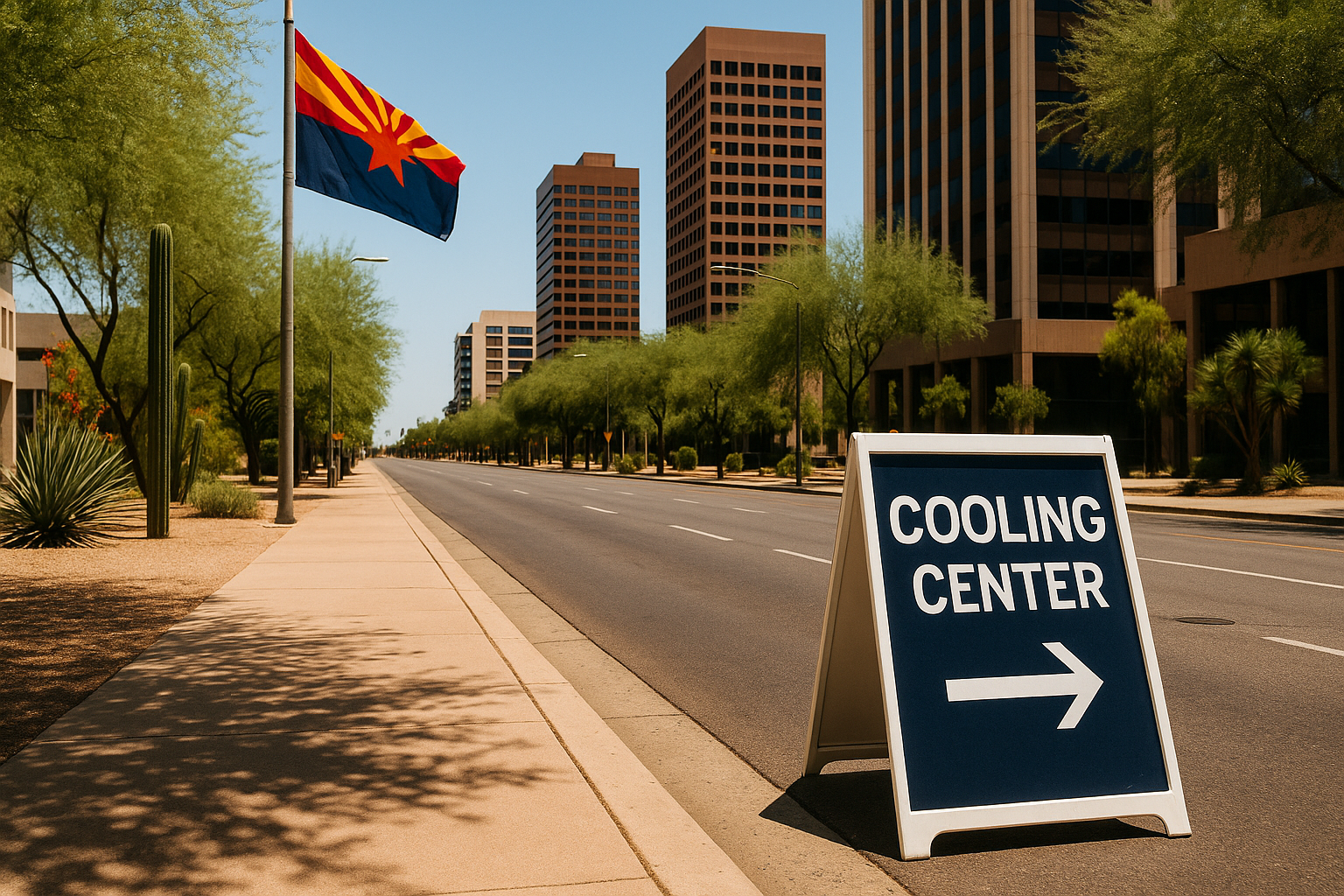
Emergency services, including heat relief centers and public cooling sites, offer some respite. Phoenix’s City Hall has also promoted the Heat Relief Network, which lists dozens of locations providing air-conditioned space and water phoenix.gov. However, families on shelter waitlists often lack regular access to these lifesaving resources.
Community and Policy Responses
Phoenix recently opened a 24/7 heat respite site at 20 W. Jackson St., aimed at unhoused individuals. Libraries such as Harmon, Cholla, and Yucca have extended hours until 10 p.m., functioning as cooling centers youtube.comphoenix.gov. Nevertheless, these temporary measures fall short of providing long-term solutions for families facing prolonged homelessness.
St. Vincent de Paul and other nonprofits have parameter-based interventions—offering temporary housing vouchers and support—but their resources are also limited, especially during prolonged heat events .
Underlying Issues Beyond Heat
While extreme temperatures drive urgency, systemic issues underlie the crisis:
- Housing supply shortages and skyrocketing rental costs in Phoenix and surrounding cities.
- Insufficient income support, with many shelter families lacking stable employment or earn wages that don’t cover rent.
- Inadequate emergency shelter funding, which hasn’t kept pace with growing demand abc15.com.
Heat-related vulnerability highlights the broader lack of affordable housing and living-wage jobs in the region.
What Families and Community Members Can Do
- Call 2-1-1 Arizona to connect with shelter openings and heat relief services.
- Visit cooling centers and hydration stations during midday heat peaks.
- Support local nonprofits through donations or volunteering—every shelter bed made available counts when waitlists stretch into weeks.
- Advocate for policy action, urging city and county officials to boost funding for shelters, housing initiatives, and workforce pathways.
Looking Ahead
As the summer heat intensifies, Phoenix faces mounting pressure to rapidly expand its support infrastructure. Addressing long shelter waitlists requires sustained investments in permanent housing, emergency services, and employment opportunities.
Only through coordinated action—from community organizations, municipal leaders, and state policymakers—can Phoenix prevent its most vulnerable families from overheating literally and metaphorically in the desert summer.